Small-Kitchen Workflow and Vertical Storage
Small Pantry Organization: Build Zones Before Buying Containers
Build a pantry zone map around use frequency and access problems before deciding whether bins, risers or other organizers are needed.
Published by Dwelling Notes
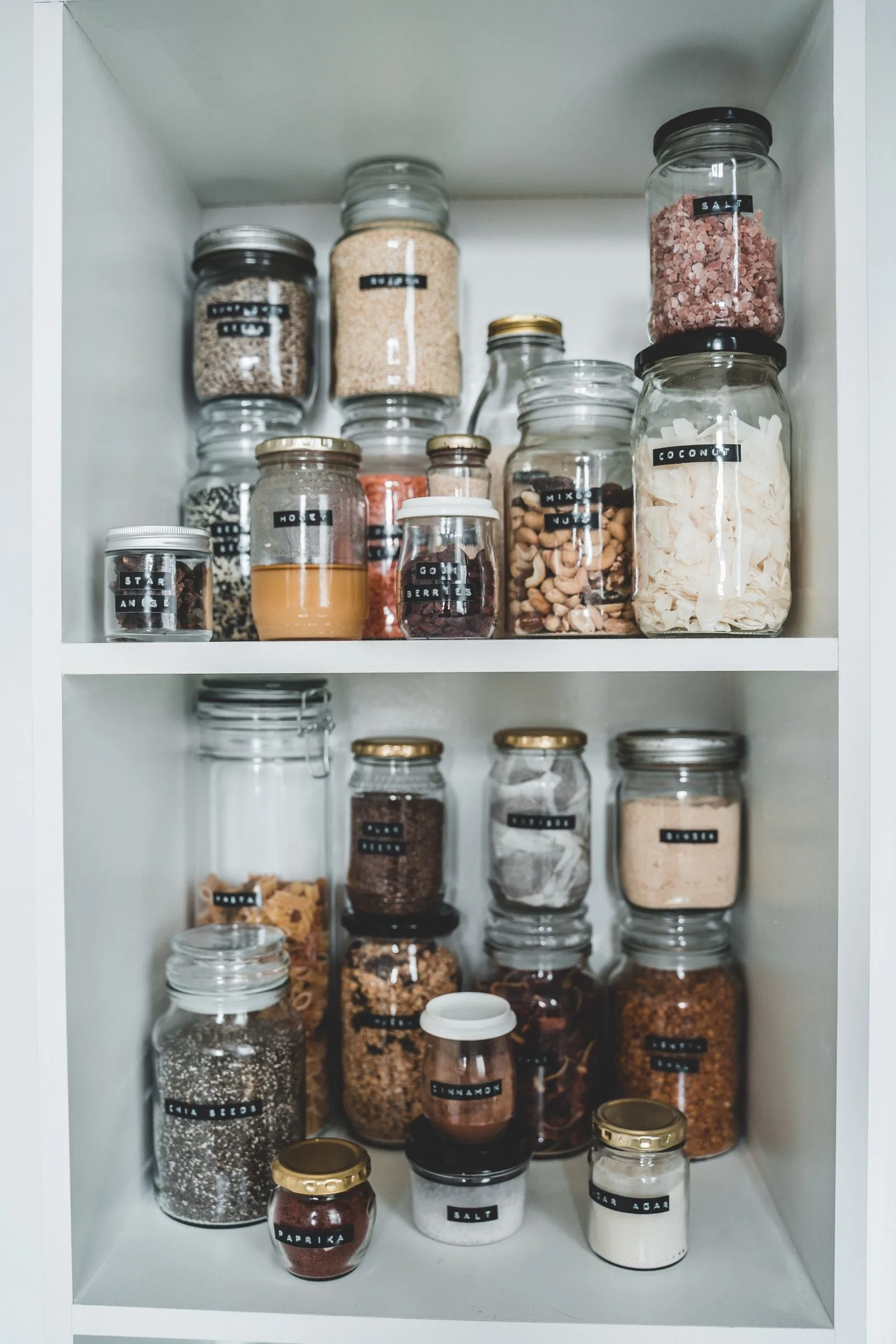
A small pantry can be full and still feel difficult to use.
The problem is often not the number of shelves or the amount of food. It is that frequently used items are buried, duplicate products are scattered in different places, and containers are added before anyone decides what each shelf is supposed to do.
A better starting point is a pantry zone map.
Instead of asking, Which bins should I buy?, ask:
- What do I reach for every day?
- What do I use once or twice a week?
- What is backup stock?
- Which items disappear at the back of a shelf?
- Which shelf is doing too many jobs at once?
Once those questions are answered, organizers become tools for specific problems rather than decoration for the pantry.
Start with a partial reset, not a full makeover
You do not need to empty every shelf onto the floor.
Clear enough space to see the shelf dimensions, the items that live there, and the way you currently reach them. Work one section at a time if the pantry is large enough to become overwhelming.
As you remove items, sort them by how they are actually used in your household.
Useful groups may include:
- breakfast;
- cooking staples;
- snacks;
- baking;
- drinks;
- lunch packing;
- backstock;
- household supplies, if they share the same pantry.
There is no universal set of pantry categories. Use the categories that match your routines.
Separate frequency from category
Two items can belong to the same category and still deserve different locations.
For example, a cooking oil used every day and a specialty ingredient used once a month are both cooking products, but they do not need equal access.
Mark each group as:
- daily or near-daily;
- weekly;
- occasional;
- backup stock.
Then give the easiest-to-reach shelf space to the items that create the most repeated trips.
This simple change often improves a pantry before any new organizer is added.
Build functional zones
Now assign each shelf, shelf section or container area a job.
A zone should be easy to describe in one short phrase:
- breakfast shelf;
- weeknight cooking staples;
- snack zone;
- baking zone;
- backstock zone;
- use-first zone.
If a shelf cannot be described clearly because it contains unrelated leftovers from every category, that is a signal that the space needs a stronger rule.
The goal is not perfect visual symmetry. The goal is to make return-to-place decisions obvious.
Create a visible use-first zone
Opened packages, near-term ingredients and products you want to finish soon are easy to lose behind newer items.
Reserve one small, visible place for items that should be used before opening another package or pulling from backstock.
This can be a shelf section, a shallow bin or simply a labeled area.
Keep the idea simple. This is an organization cue, not a shelf-life or food-safety system. Follow the storage instructions on the food package for handling, refrigeration and other product-specific requirements.
Use shelf depth intentionally
Deep shelves can create a second invisible pantry behind the first row.
Before adding bins, look at how far back the shelf extends and how you retrieve items from the rear.
If the back row cannot be seen or reached without moving several front items, you have an access problem.
Possible layout responses include:
- a shallow front row plus a clearly defined backstock row;
- a riser for small items when height allows;
- a turntable for a group of items that benefits from rotation;
- a pull-forward bin for a category that is easier to move as one unit;
- reducing the number of different categories on that shelf.
Do not add a container just because the shelf is deep. Add one only if it improves visibility, retrieval or return-to-place behavior.
Decide what problem each organizer would solve
Before buying anything, write down the problem in plain language.
For example:
Small jars disappear behind each other.Snack packets fall over and spread across two shelves.Backup products get mixed with open products.The back of the shelf is hard to reach.Door space is empty, but I have not checked whether a rack would interfere with closing.
Then match the problem to an organizer class.
Risers
Useful when several small items need better line-of-sight and the shelf has enough vertical clearance.
Turntables
Useful for a compact group of products when rotating the platform improves access without crowding the shelf edge.
Bins
Useful when a category is easier to pull forward as one unit or when loose packages need a defined boundary.
Shelf dividers
Useful when vertical stacks or soft packages drift into neighboring zones.
Over-door storage
Potentially useful when the door and surrounding clearance support it. Measure the door path before choosing the system. The related Over-Door Storage: Where It Helps and Where It Gets in the Way guide covers that decision in detail.
The important step is the sequence: problem first, organizer second.
Do not decant by default
Matching containers can look orderly, but transferring food into a new container is not automatically useful.
Keep products in their original packaging when the packaging provides instructions, preparation details, ingredient information, allergen information or other information you need to retain.
If you choose to transfer a product, make sure the information required for safe and practical use remains available to the household.
This guide does not make claims about extending freshness, food safety or shelf life through decanting.
Build a five-minute reset path
A pantry system is easier to maintain when putting things away takes very few decisions.
Test the layout with a simple reset:
- Put one grocery bag of pantry items on the counter.
- Return each item to its zone.
- Notice every point where you hesitate.
- Notice every category that has no clear home.
- Adjust the zone map before adding more organizers.
If a system requires a long rearrangement every time groceries arrive, it is probably too complicated for everyday use.
Measure before using the door or adding hardware
Door-mounted and shelf-mounted systems can create useful storage, but they add another layer of fit constraints.
Before choosing one, check:
- the door swing;
- the available projection when the door closes;
- shelf positions inside the pantry;
- trim or handle conflicts;
- the exact product’s installation and clearance requirements.
Do not assume a product fits because it is described broadly as a pantry organizer.
Pantry zone worksheet
Use this simple audit before comparing organizer types.
Shelf map
- Daily-use zone: ______
- Weekly-use zone: ______
- Occasional-use zone: ______
- Backstock zone: ______
- Use-first zone: ______
Access problems
- Problem 1: ______
- Problem 2: ______
Organizer decision
- Is the problem visibility, access, category drift or unused vertical space? ______
- Can the problem be solved by moving items before buying anything? YES / NO
- Does the proposed organizer require exact measurements? YES / NO
- Have shelf and door clearances been checked? YES / NO
What to do next
If the whole kitchen feels crowded rather than only the pantry, continue with the Small-Kitchen Storage Planning Checklist before buying more organizers.
If the pantry door looks like useful extra space, read Over-Door Storage: Where It Helps and Where It Gets in the Way before selecting a rack.
If you are considering a narrow cart for pantry overflow, use Slim Rolling Carts and Gap Storage: How to Use Narrow Spaces Without Blocking the Room to measure the gap and pull-out path.
If drawers are part of the same reset, use Drawer Organization Systems: Measure First, Then Choose a Layout.
The goal is not to make every shelf look identical. It is to make the pantry easier to read, easier to reach and easier to reset with the space you already have.